Difficulty maintaining focus and concentration is increasingly common in modern environments characterized by cognitive overload, chronic stress, and sleep disruption. While lifestyle interventions remain foundational, several supplements have demonstrated potential to enhance attention, working memory, and overall cognitive performance. This article reviews current peer-reviewed research that may support sustained focus and mental clarity.
Table of Contents
- What affects focus and concentration?
- Best supplements for focus and concentration
- L-theanine + caffeine
- Rhodiola rosea
- Magnesium (L-threonate or glycinate)
- How to choose the right supplement
- Final considerations and safety
What affects focus and concentration?
Cognitive performance is influenced by multiple physiological and environmental factors. Neurotransmitter balance, particularly involving dopamine and acetylcholine, plays a central role in attention and executive function. In addition, sleep quality, stress levels, and metabolic health significantly impact the brain’s ability to sustain focus.
Chronic stress may impair prefrontal cortex function, while sleep deprivation disrupts synaptic plasticity and cognitive processing speed. Nutritional deficiencies, including magnesium and B vitamins, may further contribute to reduced mental performance.
Best supplements for focus and concentration
L-theanine + caffeine
The combination of L-theanine and caffeine is one of the most well-studied nootropic pairings. L-theanine promotes a state of relaxed alertness through modulation of alpha brain wave activity, while caffeine enhances wakefulness by antagonizing adenosine receptors.
Together, they improve attention, reaction time, and task-switching performance, while reducing the jitteriness often associated with caffeine alone.
Rhodiola rosea
Rhodiola rosea supports cognitive performance primarily through its adaptogenic effects on the stress response system. By modulating the hypothalamic–pituitary–adrenal (HPA) axis, it may reduce fatigue and improve mental endurance, particularly under conditions of prolonged cognitive demand.
Clinical evidence suggests benefits in attention, processing speed, and overall mental performance in individuals experiencing stress-related fatigue.
Magnesium (L-threonate or glycinate)
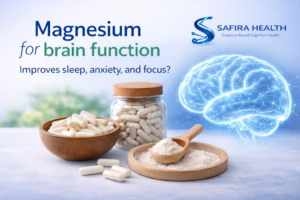
Magnesium plays a crucial role in neuronal signaling, synaptic plasticity, and NMDA receptor regulation. Certain forms, such as magnesium L-threonate, have been investigated for their ability to cross the blood–brain barrier and support cognitive function.
Magnesium supplementation may improve working memory, reduce mental fatigue, and support overall brain function, particularly in individuals with suboptimal intake.
How to choose the right supplement
Selecting an appropriate supplement depends on the underlying cause of impaired focus. For individuals experiencing acute mental fatigue, combinations such as L-theanine and caffeine may provide immediate benefits. In contrast, those with chronic stress or burnout may benefit more from adaptogenic compounds such as Rhodiola rosea.
Magnesium supplementation may be particularly useful in individuals with sleep disturbances, high stress levels, or dietary insufficiencies. As with all interventions, prioritizing quality, appropriate dosing, and individual response is essential.
Final considerations and safety
While supplements may enhance cognitive performance, they should not replace foundational lifestyle factors such as adequate sleep, balanced nutrition, and stress management. Individual responses to supplementation may vary, and excessive or inappropriate use may lead to unwanted effects.
Consultation with a qualified healthcare professional is recommended, particularly for individuals with underlying medical conditions or those taking medications.