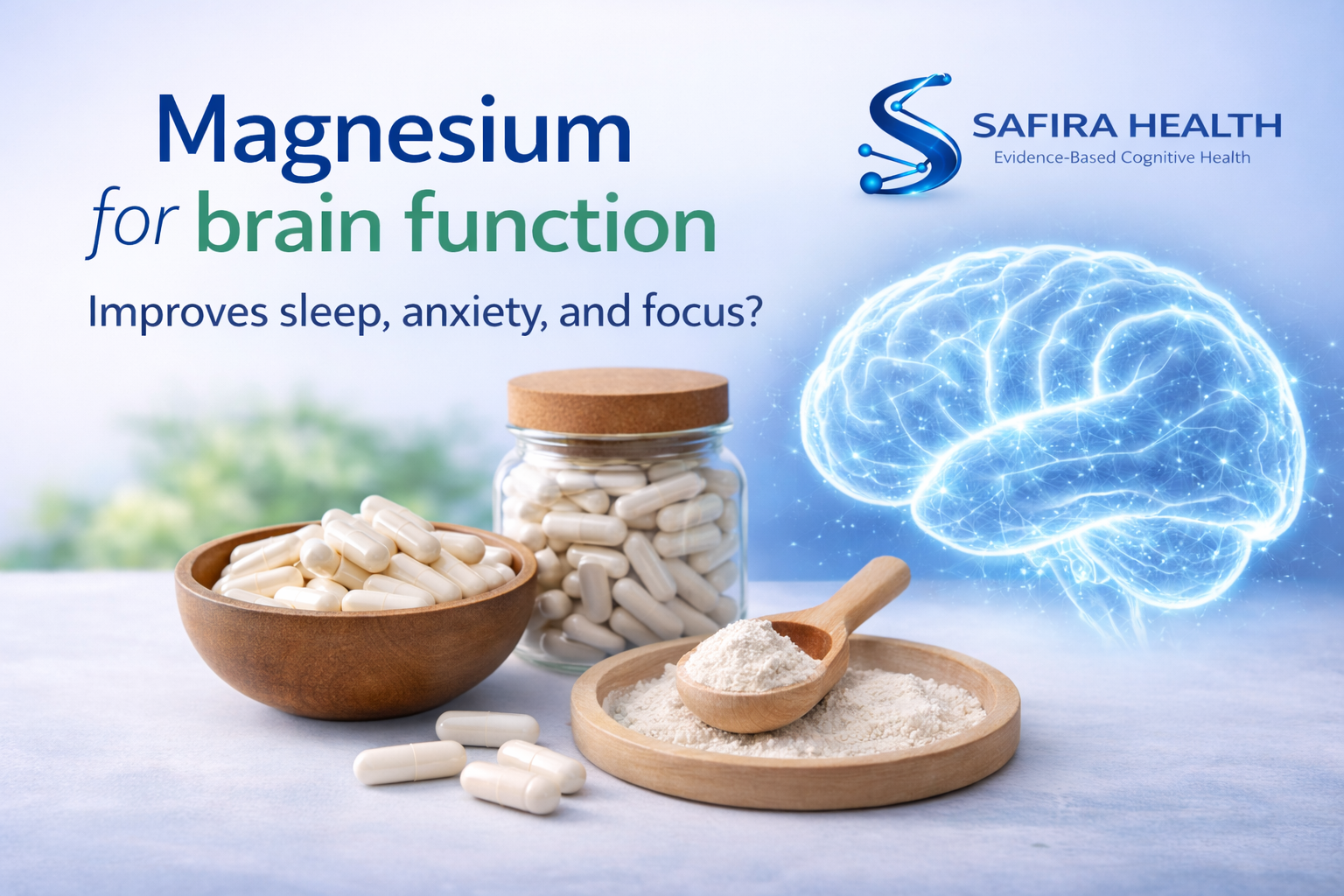
Magnesium is one of the most widely used supplements for improving sleep, reducing anxiety, and supporting brain function. Despite its popularity, the scientific evidence is often misunderstood or oversimplified.
Magnesium plays a critical role in neuronal signaling, neurotransmitter balance, and stress regulation. However, its real-world effects depend on factors such as baseline deficiency, dosage, and the specific form used.
In this article, we break down what current research actually shows about magnesium and brain function.
What is Magnesium and Why Does the Brain Need It?
Magnesium is an essential mineral involved in over 300 enzymatic reactions in the body. In the brain, it plays a key role in:
- Regulating NMDA receptors (linked to learning and memory)
- Supporting GABA activity (the brain’s primary inhibitory neurotransmitter)
- Modulating the stress response
Low magnesium levels have been associated with increased neuronal excitability, poor sleep quality, and higher stress sensitivity.
How Magnesium Affects the Brain
Magnesium influences brain function through several mechanisms:
NMDA Receptor Regulation
Magnesium acts as a natural blocker of NMDA receptors, preventing excessive neuronal firing. This is important because overactivation of NMDA receptors is linked to neurotoxicity and cognitive dysfunction.
GABA Support
Magnesium enhances GABAergic signaling, which promotes relaxation and reduces anxiety.
Stress Response Modulation
Magnesium helps regulate the hypothalamic–pituitary–adrenal (HPA) axis, which controls cortisol levels and the body’s stress response.
Magnesium for Sleep
Magnesium is often marketed as a sleep aid, but the evidence is mixed.
Studies suggest that magnesium supplementation may:
- Improve sleep quality in individuals with low magnesium levels
- Reduce sleep latency (time to fall asleep)
- Support deeper, more restorative sleep
However, effects in healthy individuals without deficiency tend to be modest.
Key point: magnesium is more effective when deficiency exists
Magnesium for Anxiety and Stress
Magnesium has shown potential benefits in reducing mild anxiety symptoms, particularly in:
- Individuals with chronic stress
- People with low dietary magnesium intake
Mechanistically, this is linked to:
- Reduced excitatory signaling
- Improved GABA activity
- Lower cortisol response
That said, magnesium is not a replacement for clinical treatments in moderate to severe anxiety disorders.
Magnesium for Focus and Cognitive Performance
Evidence for magnesium improving cognition is limited but evolving.
Magnesium L-Threonate (Special Case)
This form has gained attention due to its ability to cross the blood–brain barrier more effectively.
Some studies suggest it may:
- Improve working memory
- Enhance synaptic plasticity
However, human evidence is still limited and not conclusive.
Which Form of Magnesium Is Best?
Different forms of magnesium have different effects:
- Magnesium Glycinate → best for relaxation and sleep
- Magnesium Citrate → better absorption but may affect digestion
- Magnesium L-Threonate → potential cognitive benefits
Dosage and Safety
Typical effective dosage:
- 200–400 mg elemental magnesium per day
Important considerations:
- High doses may cause gastrointestinal discomfort
- Individuals with kidney disease should consult a physician
- Magnesium from supplements should complement dietary intake
Who Should Consider Magnesium?
Magnesium supplementation may be most beneficial for:
- Individuals with poor sleep
- People under chronic stress
- Those with low magnesium intake
- Individuals experiencing mild anxiety
Final Verdict
Magnesium plays a fundamental role in brain function, particularly in regulating stress, sleep, and neuronal activity.
While it is not a “cognitive enhancer” in the traditional sense, it can meaningfully support brain health in individuals with suboptimal magnesium levels.
As with most supplements, the benefits are context-dependent and should not be overstated.